True Immortality

Most people misunderstand immortality because they imagine it in terms of infinite survival. They picture an endless continuation of the same life - more days, more memories, more experiences stretched across an infinite timeline. Heaven, reincarnation, higher realms, future awakenings….different traditions use different language, but the fantasy is the same: this self, preserved somehow, spared from ending. It comes from fear. Specifically, the fear of disappearance.
Every authentic spiritual tradition that speaks of immortality is pointing to something far more radical than endless survival. Immortality does not mean living forever in time. It means stepping outside of time altogether.
Time, as we experience it psychologically, is not neutral. It is built from memory and anticipation. Regret binds us to the past. Fear and desire pull us into the future. The mind oscillates endlessly between what has already happened and what might happen next. Rarely does it come to rest. And because of this, most people spend their lives everywhere except where life is actually occurring….here and now.
The real chain that binds us is not death.
It’s psychological time.
This is why spiritual traditions place such emphasis on the present moment. Not because it is comforting or poetic, but because it is the only doorway out of time. When attention fully releases its grip on past and future, something fundamental shifts. Awareness is no longer filtered through memory or projection. It is no longer narrating, comparing, or rehearsing. It simply is.
This is not an altered state. It is not mystical in the dramatic sense. It is ordinary, direct, and unmistakable. And it has no age. It is ageless.
The body exists in time. It grows, changes, and eventually decays. That much is unavoidable. But consciousness, when it is no longer entangled in thought, does not share the body’s timeline. It does not accumulate years. It does not carry history. It does not anticipate an ending. It is always now.
This is why Zen speaks relentlessly about sitting, breathing, posture, and presence. Not as techniques to achieve something later, but as ways of stripping away distraction until what has always been present becomes obvious. When you sit still long enough, the future stops demanding your attention. The past loosens its grip. What remains is awareness without a reference point.
This is what the traditions are pointing to when they speak of eternal life.
Not survival. Not continuation. Timelessness.
Death only applies to things that exist within time. A body can die because it was born. A story can end because it had a beginning. An identity can dissolve because it was constructed. But what is fully present - what is not built from memory or anticipation - was never born in the first place. And what was never born cannot die.
This is why mystics across cultures speak of death losing its power long before the body stops breathing. When awareness is no longer identified with form, death becomes a biological event, not a psychological catastrophe. It no longer defines existence. It no longer dominates thought. It no longer casts a shadow backward over life.
Most people live as if death is waiting for them somewhere in the future. In reality, death is only relevant to the part of the self that is constantly projecting itself forward. When that projection collapses, so does death’s authority.
This is also why so much modern spirituality misses the point. When people talk about ascension, higher dimensions, future awakenings, or evolving into something more, they are still operating within time. They are postponing freedom. They are placing fulfillment somewhere else - either later, or above, or beyond. This is just another form of seeking, another way of avoiding the simplicity of being here.
The promise of immortality becomes a distraction when it is framed as something to be attained rather than something to be recognized.
Real spiritual maturity is not about accumulating experiences or insights. It is about subtraction. It is about removing everything that pulls attention away from the present. When nothing is pulling you away, you discover that you were never trapped in time to begin with.
This is not an abstract realization. It shows up in ordinary life. In the way you eat, walk, listen, and speak. When you are fully present, anxiety loses its fuel. Regret loses its grip. The mind becomes quieter, not because you have forced it into silence, but because it no longer has anywhere to run.
In this state, life becomes strangely intimate. A cup in your hand. The sound of the wind. The weight of your body on the floor. Nothing special, yet nothing lacking.
This is the immortality hidden in plain sight.
It does not require belief. It does not depend on metaphysics. It does not promise a future reward. It is available whenever attention stops fragmenting itself across time. And it ends the search not by answering questions, but by making them irrelevant.
The irony is that people seeking immortality are usually trying to escape death, when what they really need to escape is time. Not chronological time…that is unavoidable…but psychological time, the endless mental movement that keeps them from inhabiting their own lives.
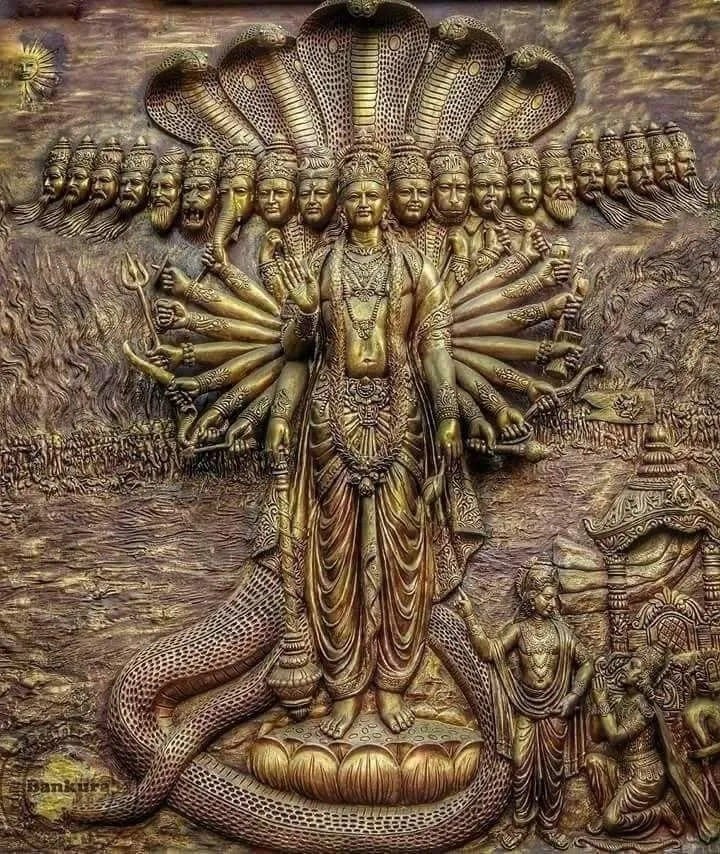
When you stand completely here, with nothing pulling you backward or forward, something is revealed. Not a vision or an idea, but a direct knowing: this does not pass.
The body will. The story will. The world will change.
But what is fully present has always been untouched by birth and decay.
That is the only immortality worth speaking of.